


Jewels of Sonoma County
The winegrowing region that shares its eastern border with a far more
famous neighbor, Napa Valley, Sonoma stands proudly in plain sight.
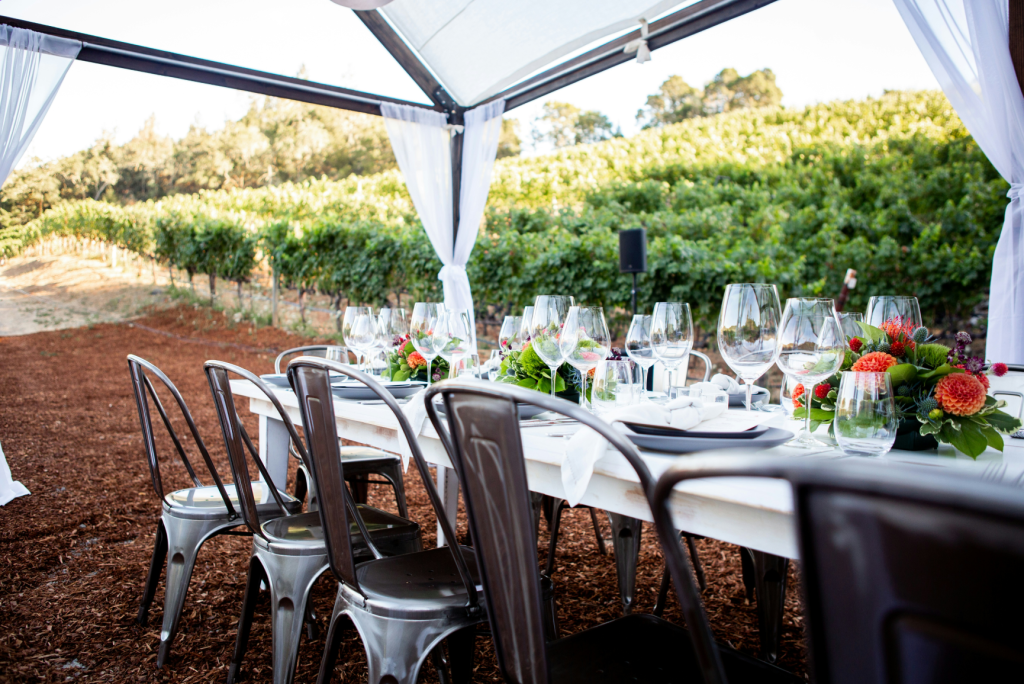
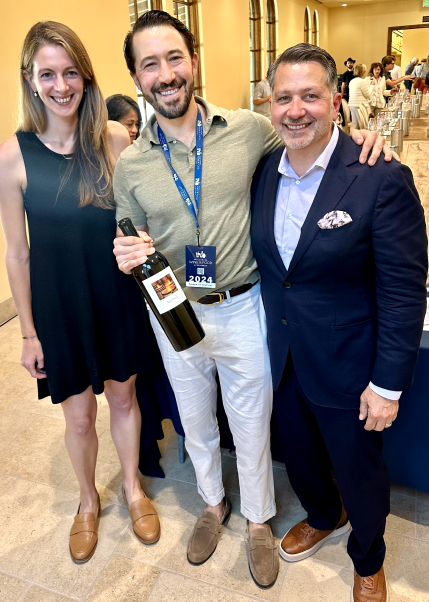
I’m just back from hosting a couple of really fun wine tastings at the third annual Healdsburg Wine & Food Experience, a festival hosted by FOOD & WINE in collaboration with Sonoma County Winegrowers, celebrating the agricultural bounty of this storied county. While neighboring Napa County seems to get more attention, at least from a media perspective, Sonoma County is a larger geographic region than Napa County, offering more wineries and vineyards across a greater number of appellations. In Sonoma County, you’ll also find a greater diversity of grapes grown and vinified. Most folks appreciate a little variety—and Sonoma County offers plenty.

Stretching from the Pacific Ocean in the west to the Mayacamas Mountains in the east, Sonoma County is the largest wine producer in Northern California’s Wine Country region, which also includes Napa, Mendocino, and Lake Counties. Sonoma’s success can be traced to two prime reasons: climate and soil, which together amount for what the French describe as terroir. Sonoma’s climate is ideal for growing grapes, with long, dry, sunny, warm-but-rarely-hot summer days buttressed by cool nights, ocean breezes and fog. Oceanic fog drifts through the Petaluma Gap into the interior valleys, helping create daily temperature swings of 40 degrees or more, a diurnal range that preserves acidity and complexity in the county’s wine grapes.
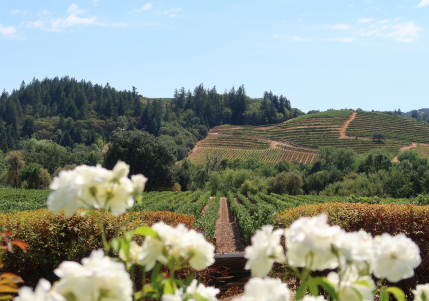
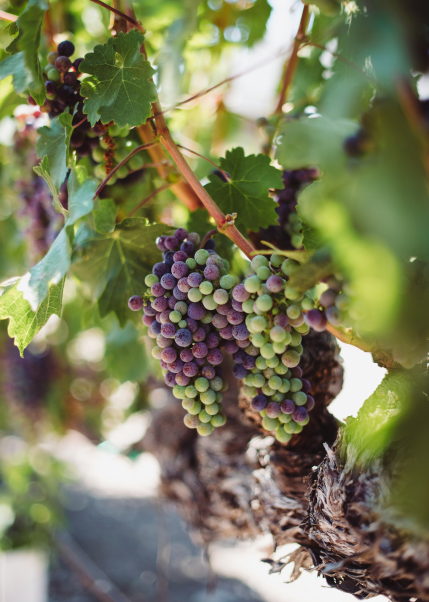
Also remarkable here is the wide-ranging nature of the soil: With the Mayacamas Mountains, the rolling hills of the Carneros, the Russian River Valley, coastal hills, and other geographical features, Sonoma County has more soil types than all of France, ranging from rich + loamy to volcanic/rocky and well drained. In this amazing ecosystem, more than 60 grape varieties are grown in Sonoma County, but just six take precedence. During the 2021 harvest, the top grape varieties that were crushed (ranked in tons produced) are listed in order of production, with Chardonnay at the top, followed by Pinot Noir, Cabernet Sauvignon, Sauvignon Blanc, Zinfandel and Merlot.
Sonoma County’s wealth of unique terroirs is reflected in the county’s 19 distinct American Viticultural Areas (known as AVAs or appellations), each with its own distinctive characteristics. Think of AVAs as ‘appellations,’ or addresses, within which the government sets standards that define what can be grown and how it’s produced within the confines of that delineated area. They are:
- Alexander Valley
- Bennett Valley
- Carneros – Sonoma
- Chalk Hill
- Dry Creek Valley
- Fountaingrove District
- Fort Ross – Seaview
- Green Valley of Russian River Valley
- Knights Valley
- Moon Mountain
- Northern Sonoma
- Petaluma Gap
- Pine Mountain – Cloverdale Peak
- Rockpile
- Russian River Valley
- Sonoma Coast
- Sonoma Mountain
- Sonoma Valley
- West Sonoma Coast
Within these 19 wine regions you’ll find around 425 wineries. They range from small, family-run operations to internationally acclaimed wine houses. What’s even more astounding (for me) is that only 6% of the county is planted to vineyards, or almost 63,000 acres of vineyards. That’s how big Sonoma County is.
With this context in mind, my co-host, Esther Mobley, the wine critic at the San Francisco Chronicle, presented ‘The Jewels of Sonoma County,’ sort of a tribute to six of the most legendary wineries in the region. Here they are, presented with the following wines, along with a few words about each winery:
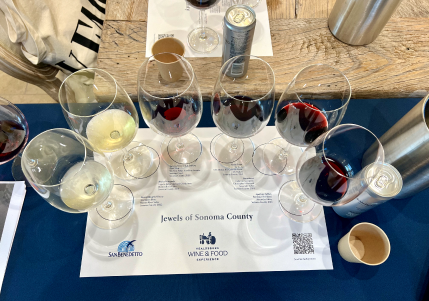
Merry Edwards Winery 2022 Sauvignon Blanc, Russian River Valley
Merry Edwards was founded in 1997 and is lauded for producing terroir-driven, single- vineyard Pinot Noirs of immense depth, elegant structure and exceptional longevity from 80 acres of estate vineyards in the Russian River Valley. Its fragrant, barrel-aged Russian River Valley Sauvignon Blanc is among the most sought after made in California. Now a Certified California Sustainable Winery, the brand entered a new chapter after Merry’s retirement in 2020 with Merry’s handpicked successor, Winemaker Heidi von der Mehden, and Winery President Nicole Carter have taken up exactly where Merry left off.
Kistler Vineyards 2019 Laguna Ridge Vineyard Chardonnay, Russian River Valley
Established in 1978 by Steve Kistler and Mark Bixler, Kistler specializes in crafting single clone Chardonnays across 15 vineyards, spanning Carneros, Sonoma Valley, Russian River Valley, and Sonoma Coast. Since the mid-1980s, Kistler has been working with a singular Chardonnay clone imported from Burgundy in the early 20th century. Jason Kesner began making the wines here in 2008; and Steve Kistler retired in 2017. The gorgeous Chardonnay is only produced in magnums.
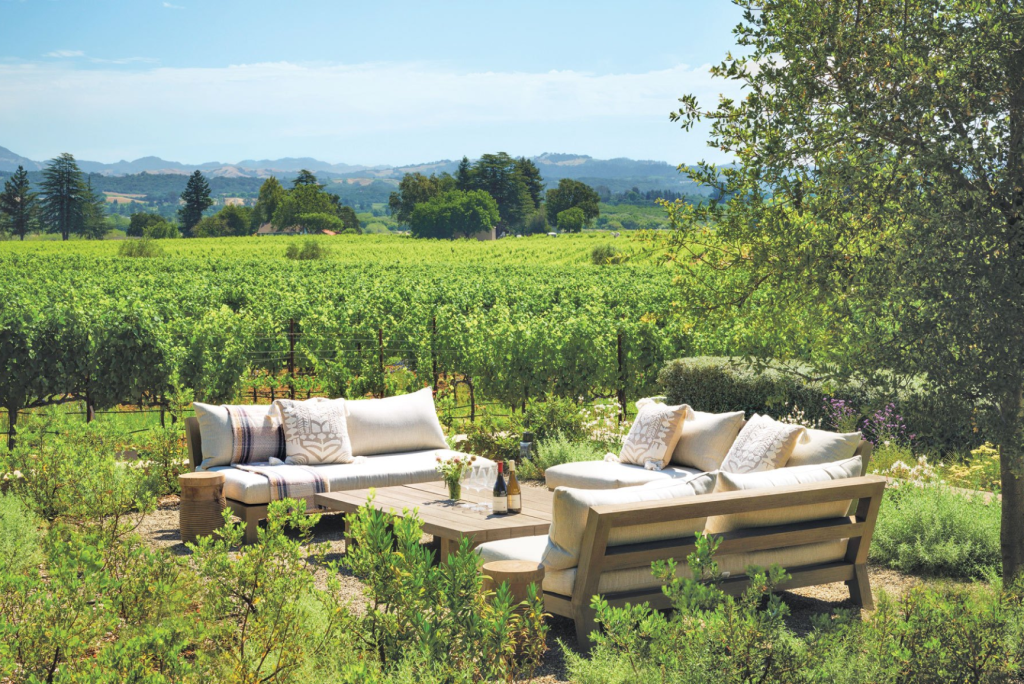
Photo: Douglas Friedman/Trunk Archive
Flowers Vineyards & Winery 2022 Pinot Noir ‘Sea View Ridge,’ Fort Ross-Seaview, Sonoma Coast
Located in the coastal hills above Fort Ross State Historic Park, overlooking the Pacific Ocean, Ft Ross-Seaview is one of Sonoma’s most coveted AVAs. Carved out of the larger Sonoma Coast AVA in 2011, the 27,500-acre AVA was given special consideration for its soaring elevation and remote, rugged location. Three decades ago, Joan and Walt Flowers had a simple goal: Make exceptional wine that captures the wild beauty of the land and the spirit of the Sonoma Coast. Planted in 1998, Sea View Ridge Vineyard is perched upon Smith Ridge, higher and closer to the ocean than Camp Meeting Ridge Vineyard. Sea View has unobstructed views of the rugged coastline, green valleys, and surrounding mountains.
Vérité Estate 2016 ‘La Muse,’ Sonoma County
The Sonoma County AVA on the label is highly misleading, because thanks to the partnership between Bordeaux vigneron Pierre Seillan and the late, great Jess Jackson, who gave Seillan carte blanche to source grapes from anywhere the Jackson Family owns land. So: Practically Everywhere in Sonoma! Having crafted the wines of Vérité since 1998, Pierre is today joined by his daughter Hélène, who has stepped into the role of Winemaker, ushering in the 2nd generation of family partnership. This stunning blend of 93% Merlot, 5% Cabernet Franc, 2% Malbec reflects a mosaic of more than 50 micro-crus within Alexander Valley, Bennett Valley, Chalk Hill and Knights Valley.
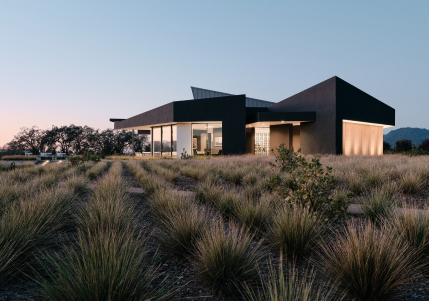

Stonestreet 2014 Cabernet Sauvignon ‘Christopher’s Vineyard,’ Alexander Valley
Jess ‘Stonestreet’ Jackson and Barbara Banke established the Stonestreet in 1995, using his middle name for the estate, and their son Chris and his wife Ariel continue that legacy — passing the middle name “Stonestreet” from father to son for three generations. Stonestreet is one of the self-described ‘most expansive and multi-faceted mountain vineyards in the world,’ producing a distinctive collection of single vineyard wines — powerful Cabernet Sauvignon, soulful Chardonnay and electric Sauvignon Blanc. The Jackson family acts as stewards of the land, caring for this 5,500-acre mountain estate that towers high above the Alexander Valley in the Mayacamas Mountain Range.
Aperture Cellars 2018 Red Blend, Alexander Valley
The story of Aperture Cellars began over two decades ago, when owner/winemaker Jesse Katz was growing up alongside his father, renowned photographer Andy Katz, brought him on visits to the most famous vineyards around the world, from the heart of Burgundy to the hills of Tuscany. Each wine label features an original Andy Katz photograph, suggesting every Aperture wine as an expression of art both inside the bottle and out. Over two decades of harvests learning from the best producers in the world — Château Pétrus, Screaming Eagle, Viña Cobos, Bodega Noemia, and more — led to the birth of Aperture Cellars in 2009. Jesse, who was one of the few winemakers to attend this seminar, shared that his mission for Aperture is to find the top cool-climate spots around California for his beloved Bordeaux varieties to thrive in. Aperture is the first 100-point Cabernet in Alexander Valley history (from 4 different critics). Jesse also made the only 100-point malbec in us history (from 5 different critics). He has made a total of 18 100-point wines.
Anthony Giglio is a longtime Contributing Editor at FOOD & WINE Magazine, and the founding Wine Director for The American Express Centurion Global Lounge Collection.
