


Burgundy, from the best of the best to the best of the bargains.
A celebrated winery reveals challenges that make the 2021 vintage the one that brings you back to Burgundy.
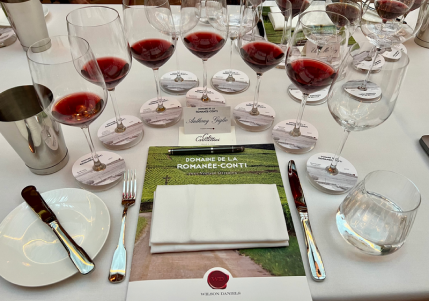
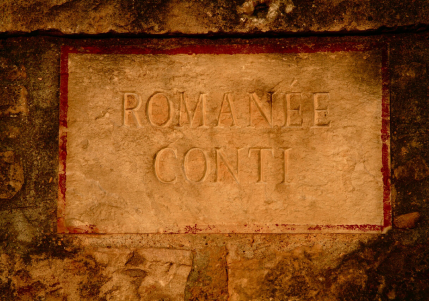
I recently attended the 2021 vintage debut tasting of DRC wines. If those initials don’t ring a bell, here’s how Sotheby’s describes this vaunted Burgundy winery: Domaine de la Romanée- Conti is “the most hallowed name in Burgundian wine, and quite possibly the entire vinous world; a name that is implicitly regal, indisputably coveted and effortlessly content in its position of unimpeachable noblesse. DRC. Its acronym alone suffices to command the attention of everyone who aspires to enter the realm of wine Valhalla.” So, there you have it.
Whether or not you aspire to pay what entry to ‘Valhalla’ costs—anywhere from $400 (exceptionally rare pricing at the low end) to nearly $8,000 at the high end; and that’s just current vintage prices, not for older ones)—is beside the point. What DRC means to me—who’s fortunate enough to be invited to taste 2 ounces of each of the eight wines they produce professionally, but most definitely cannot afford to buy it personally—is educational. While I truly enjoy tasting the wines from year to year, thanks to its US Importer Wilson Daniels, I don’t do it because I am going to write about it with the expectation that many people will buy it. On the contrary, I listen to what DRC’s co-directors, Perrine Fenal and Bertrand de Villaine, say about the vintage. It’s an opportunity for the winery to lift its metaphorical veil to reveal exactly what went into making its proverbial sausages.
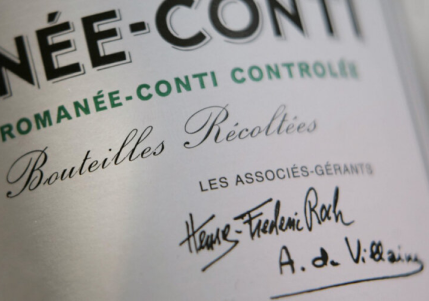

“Domaine de la Romanée- Conti is “the most hallowed name in Burgundian wine, and quite possibly the entire vinous world; a name that is implicitly regal, indisputably coveted and effortlessly content in its position of unimpeachable noblesse.”
Why does this matter? Think of it along the lines of that scene in The Devil Wears Prada when Miranda schools Andrea about how high fashion trickles down to the masses. If DRC had a great vintage year, meaning exceptional weather and growing conditions, it follows that other Burgundy producers did, too. So as DRC’s tide rises around, say, the extraordinary 2020 vintage, so rises the potential for everyone else in Burgundy who made wine the same year. Do you follow me? I’m getting to the point because the 2021 vintage they presented was anything but exceptional, and this opens the possibility of finding more affordable Burgundies (that are not DRC) as a result.
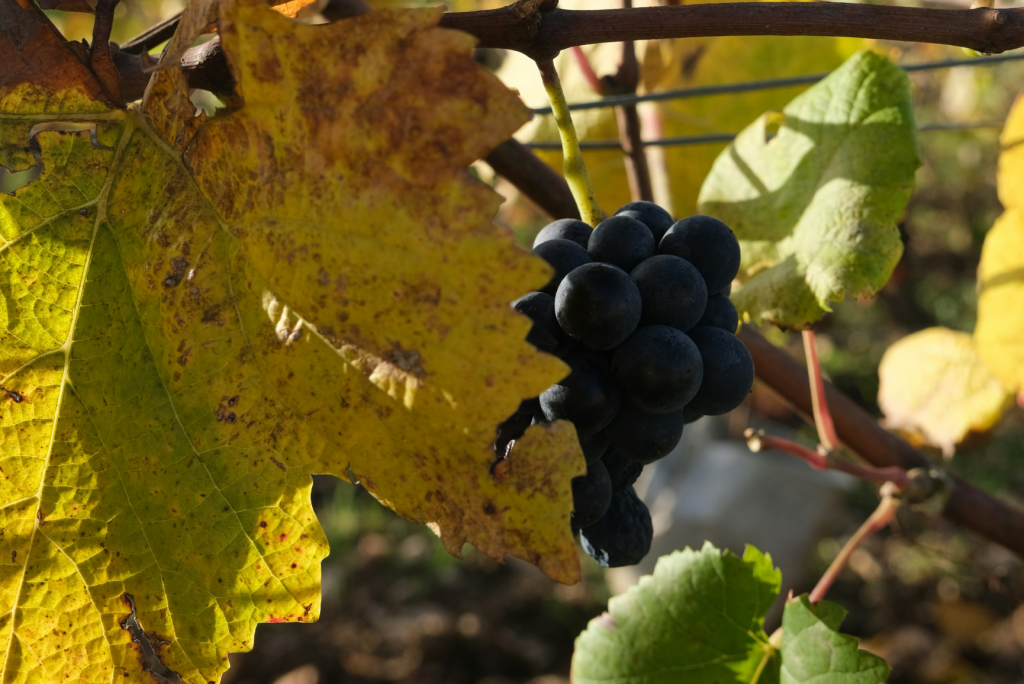
As Bertrand de Villaine described the 2021 vintage, all seemed well and good in early Spring, “But this was without taking into account Mother Nature, who was preparing for us one of the lessons she regularly takes upon herself to give us.” On the nights of April 6, 7 and 8, a winter- like frost hit the vineyards. Additionally, heavy snow fell the night of the April 7, as well, which dampened the buds and let them vulnerable to the frost. “Damage was severe throughout the whole of Burgundy.” In the Côte de Beaune there were catastrophic consequences for Chardonnay vines, with at least half of the potential crop of white wines being lost. The red wines of the Côte d’Or were not hit as badly by frost as were the whites, but thin-skinned Pinot Noir proved more prone to diseases like mildew, and especially oidium during the summer—the coldest July in 50 years—leaving growers perpetually busy defending the crop. Finally, warm weather and drying winds throughout August and into September helped deliver almost surprising levels of maturity for the reds.
“Our team was crying the day after the frost,” recalled Perrine Fenal. “All that work gone for nothing. We were quite on the verge of despair.” Ultimately, Fenal continued, “we harvested “ripe, thin-skinned grapes that gave us a lot of juice and nice phenolic balance.”
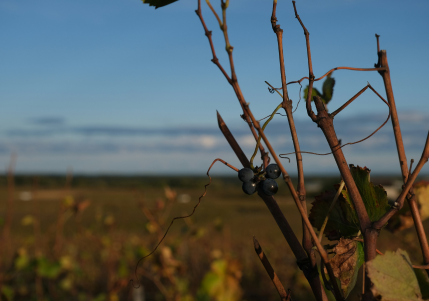
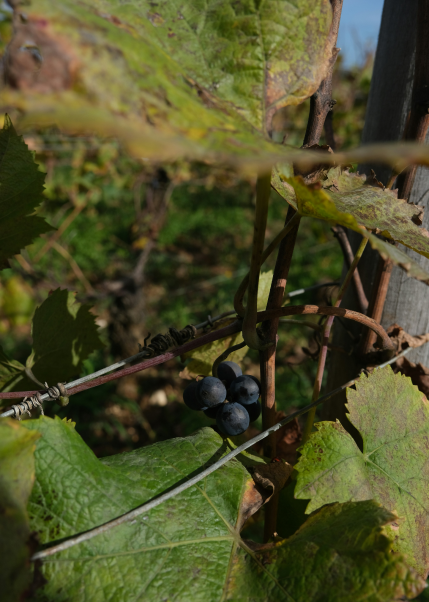
As a lesson, Fenal concluded, every vintage leaves a mark and asks questions. “This vintage questions our relationship to nature, our duties, and our rights. We can’t control nature.” She described 2021 as a vintage that exhibit purity and clarity. “They show brightness and transparency. And the expression of their terror. And serenity and joy. We feel joy and grateful.”
Bertrand de Villaine said the style of 2021 Burgundy could be compared to the wines they produced din the 1970s and ‘80s: “Wines less powerful, but in return finer, more delicate and elegant than the latest richer and opulent vintages from very ripe harvests.”
In other words, if you love Chardonnay and Pinot Noir, in general, but shy away from White and Red Burgundy because of their notoriously high prices, bottles labeled 2021 might be your entrée. Need suggestions for affordable Burgundy? I turned to FOOD & WINE magazine, where Ethan Fixell provided this cheat sheet a few months back, naming the best producers of affordable Burgundy, village by village.
Marsannay:
Look for:
- Domaine Charles Audoin
- Domaine Phillipe Charlopin
- Domaine Sylvain Pataille
Fixin:
Look for:
- Domaine Pierre Gelin
- Maison Louis Jadot
- Domaine Berthaut-Gerbet
Nuits-Saint-Georges:
Look for:
- Domaine Faiveley
- Bouchard Père et Fils
- Maison Joseph Drouhin
Pernand-Vergelesses:
Look for:
- Domaine Chandon de Briailles
- Maison Louis Jadot
- Domaine Dubreuil-Fontaine
Bouzeron:
Look for:
- Domaine A. et P. de Villaine
- Domaine Faiveley
- Domaine Ramonet
Saint-Véran:
Look for:
- Maison Joseph Drouhin
- Daniel & Julien Barraud
- Domaine Corsin
Chablis (…ish) Saint-Bris:
Look for:
- Domaine Guilhem & Jean-Hugues Goisot
- Domaine Clotilde Davenne
- Simonnet-Febvre
